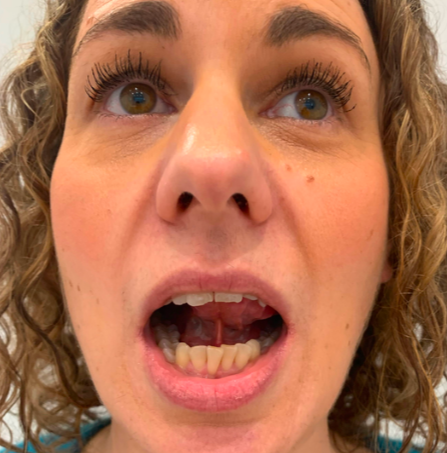


Tongue Tie and Singing: My Conversation on the Your Voice Unlocked Podcast
How Does Having a Tongue Tie Affect Singing?
My journey, and how I now support tongue-tied singers
I was recently invited to speak on the Your Voice Unlocked podcast about tongue ties and singing — a topic that’s deeply personal to me, both as a singer and as a vocal coach.
What began as a conversation about anatomy quickly became something bigger: a story about losing trust in my voice, rediscovering it, and ultimately reshaping the way I now help singers who feel stuck, frustrated, or disconnected from their sound.
You can watch the full conversation above. Below, I’ve shared some of the key themes and reflections that came up — especially if you’re a singer wondering whether a tongue tie might be affecting your voice.
Finding My Voice Again: A Journey of Rediscovery
As a child, singing felt natural and joyful. I sang constantly.
But as I got older, my voice became unpredictable.
It tired easily. My range felt unreliable. And worst of all, I developed intense performance anxiety — including hyperventilating during performances despite rehearsals going well. Singing stopped feeling safe.
I searched for help, but much of the guidance I received didn’t explain why my voice behaved the way it did. Without answers, I started to doubt myself. Eventually, singing — something that once felt like part of my identity — became a source of frustration and shame.
Walking Away From Singing (Without Realising It)
For about four years, I didn’t sing at all.
I didn’t consciously quit. I simply stopped. I finished university and quietly told myself I must have “grown out of” singing — as though it were a childhood hobby rather than something meaningful.
In hindsight, I can see how much anger and grief sat underneath that decision. I didn’t trust my voice, and it felt easier to walk away than to keep being disappointed by it.
Eventually, though, the pull to sing returned. When I moved to London, I decided to try one last time. I remember thinking: If anyone can help me understand this, they’ll be here.
Understanding Changed Everything
That decision changed the course of my life.
For the first time, I worked with teachers who could explain what was actually happening in my voice — mechanically, physically, and emotionally. Suddenly, my struggles weren’t mysterious or personal failures. They were understandable, workable patterns.
Each new insight felt like finding a missing piece of a map. Notes that had felt impossible became accessible. Singing started to feel safer. More reliable. More mine again.
That sense of empowerment — of understanding why something isn’t working and how to approach it differently — is something I now prioritise deeply in my own coaching.
Discovering My Tongue Tie
Years later, another major piece of the puzzle emerged.
During a voice retreat in Spain, my coach — fresh from a workshop on tongue ties — watched me sing and suddenly stopped.
She’d had an “aha” moment.
A tongue tie occurs when the tongue remains partially tethered to the floor of the mouth, limiting its mobility. For singers, this can subtly (and sometimes not so subtly) affect:
vocal freedom and endurance
range and resonance
jaw and neck tension
breath coordination
recovery after vocal load
As I researched further, more pieces clicked into place. Tongue ties often run in families — and I learned that my brother had been diagnosed as tongue-tied as a child.
What I’d previously labelled as “just how my voice is” suddenly made much more sense.
Why This Matters for Singers
One of the biggest myths about singing is that you either have it or you don’t.
In reality, the voice is a flexible, trainable instrument. While some singers may start with physical advantages, progress comes from understanding, not talent alone.
I often see singers who’ve been told — directly or indirectly — that their struggles are personal shortcomings. That they’re “too tense,” “not breathing properly,” or “just not built for it.”
But when you identify underlying factors — whether that’s coordination, breathing patterns, or something like a tongue tie — the entire conversation changes. The work becomes collaborative, compassionate, and effective.
How I Now Help Tongue-Tied Singers
Since sharing my own experience, I’ve connected with many singers who suspect a tongue tie may be affecting their voice — whether they’re:
preparing for a frenectomy
recovering afterwards
or simply trying to understand ongoing vocal challenges
As a contemporary vocal coach and Vocal Habilitation Professional, I now specialise in supporting adult singers navigating tongue-tie-related challenges with Tongue Tie aware vocal coaching.
In our online sessions, we work gently and holistically, combining:
functional vocal technique
tongue awareness and coordination work
nervous-system-aware pacing
There’s no forcing, no one-size-fits-all approach — and no expectation that you “push through” discomfort. The goal is ease, reliability, and rebuilding trust in your voice.
A Message for Singers Who Feel Stuck
If you’re feeling disconnected from your voice, please know this:
your struggles are not a personal failing.
Whether your challenges stem from anatomy, breathing, habit, or confidence, there is a way forward. With the right support, your voice can feel safe, expressive, and dependable again.
For me, finding my voice wasn’t just about singing better — it was about reclaiming a part of myself I thought I’d lost.
That’s the work I now feel honoured to do with others.
Are you a tongue-tied singer looking for support from someone who truly understands?
You can book a free Discovery Call to explore whether working together feels like the right next step for you.
Your voice isn’t broken. It may just need a different approach.
-
Yes. Many adult singers discover tongue tie later in life. It can affect vocal freedom, stamina, range, and coordination — often in subtle ways that are easy to miss without informed guidance.
-
No. Every singer is different. Some benefit from Myofunctional Therapy and targeted vocal and breathing work alone. Support should always be individualised.