

5 Things You Can Do Today to Improve Your Singing (None of Them Are Vocal Exercises)
5 Things You Can Do Today to Improve Your Singing (None of Them Are Vocal Exercises)
If you spend any time looking for singing advice online, you’ll quickly come across a huge number of vocal exercises.
Exercises for high notes.
Exercises for breath support.
Exercises for tension.
Exercises to build agility or develop vibrato.
Short, punchy tutorials are everywhere, and it’s easy to see why.
Having trouble hitting the high notes? Read my blog How to Hit High Notes Without Straining Your Voice.
Teaching singing to a generic audience online is incredibly difficult. Voices are highly individual, and without working with someone directly it’s impossible to tailor advice to the specific body, breathing habits, and experiences that shape each person’s voice.
Exercises are one of the few tools that translate easily into short videos or tutorials, so it makes sense that so much singing advice online focuses on them.
But this can accidentally send the wrong message.
It can start to feel as though improving your singing simply means learning more and more exercises.
In my experience as a vocal coach and singer, that isn’t the case.
In fact, the more experience I’ve gained as a teacher, the fewer exercises I tend to use.
Earlier in my career I was constantly collecting new exercises, always looking for the next drill that might unlock something in a singer’s voice.
But over time I noticed something important. When the body, breathing habits, and nervous system were working well together, we often didn’t need very many exercises at all.
Instead, a few simple ones were enough — because the voice already had the conditions it needed to respond and adapt.
Singing is a human activity. We are wired to sing.
When we embrace that reality, we stop wasting time trying to force technique onto a vocal system that isn’t ready for it, and we can start addressing the things that actually allow the voice to change.
Here are five things you can start doing today that will genuinely improve your singing — and not a single one of them is a vocal exercise.
None of them are particularly sexy.
None of them are groundbreaking.
But they do work.
1. Physical Health and Your Voice
We’re all bombarded with information about what we should be doing for our health — sleep more, drink more water, exercise more, reduce stress, eat better. Protein protein protein.
I do not intend to add to that noise.
But when it comes to singing, it really can’t be said enough how closely our physical health and our voice are connected.
Your voice isn’t separate from the rest of your body. It is your body.
Things like sleep, hydration, illness, hormones, and physical fitness all have a direct impact on how your voice functions.
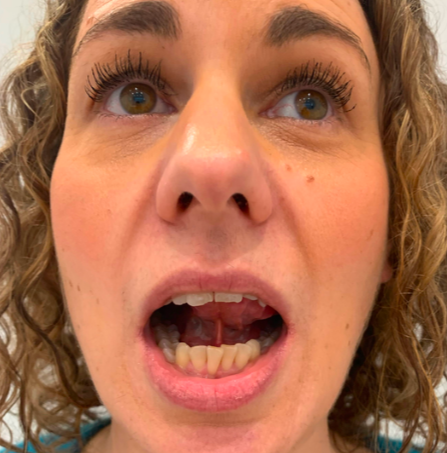
There are also individual factors that can shape how a voice behaves. Tongue tie, hypermobility, chronic health conditions, medication side effects, and other aspects of your physical health can all influence what your voice’s behaviour.
The important thing here isn’t striving for perfect health. It’s recognising that your voice and your body are working together.
That means improving your physical wellbeing will almost always improve your singing at the same time.
Start here:
If your voice has been feeling difficult lately, ask yourself whether there’s an aspect of your physical health that might need attention. Sleep, hydration, recovery, movement, or something more specific. Supporting your health is one of the most direct ways to support your voice.
Does your voice hurt when you sing? Read my blog to find out how to fix it.
2. Nervous System Regulation and Singing
Your nervous system is the part of your body that responds to stress, safety, and perceived threat.
It’s constantly scanning your environment and deciding whether it’s safe to relax or whether it needs to prepare you to react.
When the nervous system senses pressure or danger, the body tends to tighten and brace. Breathing changes, muscles become more effortful, and coordination becomes harder.
Those responses can be helpful if you’re trying to run away from something, but they’re not particularly helpful when you’re trying to sing.
Many singers have spent time in environments where there was pressure to achieve a certain sound, produce quick results, or perform in a particular way to please others. Over time, the body can start approaching singing as something stressful rather than something fun, expressive and exploratory.
When the nervous system is calmer and feels safer, coordination becomes much easier and we are more likely to enter a flow state.
Start here:
Before you begin singing, take a moment to set an intention for how you want the session to feel.
Remind yourself that your voice functions best when it feels safe enough to explore. Trying to force quick results, demanding perfection, or trying to please others are a recipe for struggle.
Instead, aim to create a practice environment where curiosity and patience are at the core.
3. Daily Breathing Habits
Breathing is obviously central to singing, but many singing exercises approach it as if everyone already breathes efficiently.
In reality, most people develop breathing habits over time that may make singing feel harder.
If someone’s everyday breathing pattern is fast, shallow and/or with an open mouth, standard breathing exercises for singing may not work well for you, and may actually leave you feeling confused and disheartened.
This is why paying attention to your daily breathing outside of singing practice can be so powerful.
When breathing becomes slower, lighter and deeper in everyday life, many aspects of your singing will automatically improve such as: smoother onsets, easier use of dynamics, a more resonant sound, and less vocal fatigue.
Start here:
Begin by observing your daily breathing, specifically looking for moments when you may be breathing with your mouth open. If you catch yourself doing this (even just a couple of times a day) gently close your mouth and return to breathing through your nose.
Many of the singers I work with do not think that they mouth breathe, but when they do this exercise they are often surprised to find that they do!
I also recommend looking at your breathing habits during the night. If you have a tendency to snore or even slightly open your mouth, you might be a good candidate for using mouth tape or nasal dilators while you sleep.
These small changes can promote deeper breathing and better vocal resilience.
You can read about the benefits of Buteyko Breathing for Singers here.
4. Self-Awareness and Proprioception
Another important foundation for singing is awareness.
In voice work you’ll sometimes hear the word proprioception. It simply means your ability to sense what your body is doing from the inside — the awareness of movement, effort, and position that helps you coordinate physical actions.
For singers, proprioception is incredibly important because the voice is an internal instrument. We can’t see most of what’s happening when we sing, so we learn largely through sensation and awareness.
This also connects to something deeper: learning to know and accept the voice you actually have.
Every voice is different. Some are light and more agile, others are rich and dramatic. Some voices naturally sit higher, others lower.
A good example of this is the casting of Wicked. Ariana Grande and Cynthia Erivo are both extraordinary singers, but their voices are very different instruments. Their roles suit the strengths of their individual voices, and if they were to switch roles it wouldn’t feel right (in my opinion).
Singing works best when we stop trying to force our voice to behave like someone else’s and start becoming curious about the instrument we actually have.
Start here:
One way to explore this is to make a playlist of songs that feel relatively easy and natural for you to sing.
Look for patterns. Do the songs tend to sit in a similar range? Are they slow with long phrases? Are they fast and speech-like? Do they belong to particular artists or voice types?
This can tell you a lot about where your natural strengths may lie.
Then, as you sing those songs, start noticing what you feel in your body. Where does the sound feel comfortable? Where does it feel more effortful? Developing this awareness helps you build a clearer relationship with your own voice.
5. Creativity and Storytelling
Singing practice can easily become very focused on exercises and technique.
And while those things can be useful, all the exercises in the world won’t help very much if we lose sight of what the voice is actually designed to do.
The human voice evolved as a tool for communication. It allows us to express emotion, convey meaning, and tell stories to other people.
Singing uses that same system.
When singing starts to feel difficult, it’s often because our attention has shifted into technical thinking. We start focusing on range, phrasing, whether we’ll reach a particular note, or whether we’re singing “correctly.”
In other words, we’re thinking about almost everything except what the voice is actually built for.
When singers spend some time thinking about what they’re singing — the situation, the character, the intention behind the words — the voice reconnects with the system it was built for, and suddenly has access to many more tools, colours and sounds.
Start here:
When you practise a song, think of it as a role in a play. The lyrics are the script.
Before you start singing, decide who the character is that you’re playing and what they are trying to express.
Of course, every singer’s voice is different, and the balance between these areas will look slightly different for each person.
This is why working with a coach who understands the whole system can often make the process much clearer and faster.
A good example of this is the way actors approach songs in film and theatre. Ryan Gosling spoke about this process when preparing to sing I’m Just Ken in the Barbie movie.
Final Thoughts
If you’re struggling with your voice, it can be tempting to keep searching for new exercises. (Ask me how I know!)
But in most cases, the issue isn’t that you need more drills. It’s that the underlying conditions that allow your voice to function well aren’t quite in place yet.
When your physical health, nervous system, daily breathing habits, awareness, and creativity are working together, the voice is much better able to adapt and respond to the things you want it to do.
So the goal isn’t to collect more vocal exercises.
It’s to work with the things that directly influence your voice — so that it can do what it was designed to do.
If this article resonated with you and you’d like help applying these ideas to your own voice, the best place to start is a discovery call.
We’ll talk about your voice, your goals, and what might help you move forward.